Category Archives: Daily Updates

MILLENNIAL BABY BOOM?

What Would a Millennial Baby Boom Mean for Housing? | Simplifying The Market

What Would a Millennial Baby Boom Mean for Housing?

Recently released data from the National Center for Health Statistics revealed that 1.3 million Millennial women gave birth for the first time in 2015. There are now over 16 million women in this generation who have become mothers.

“All told, Millennial women (those born between 1981 to 1997) accounted for about eight in ten (82%) of U.S. births in 2015.”

The data also shows that this generation has waited until later in life to become parents as only 42% of Millennial women were moms in 2014, compared to 49% of Generation X at the same age. A Pew Research Center article discussing the data, points to social influences that may have contributed to the delay:

“The rising age at first birth is hardly limited to the Millennial generation. It has been a trend since at least 1970. Many factors may contribute, including a shift away from marriage, increasing educational attainment and the movement of women into the labor force.”

Do Millennials Want to Be Parents?

“While Millennials may be delaying parenthood, it’s not for a lack of interest in eventually becoming moms and dads. Members of this generation rated being a good parent as a top priority in a 2010 Pew Research Center survey.  

Some 52% said it was one of the most important goals in their lives, well ahead of having a successful marriage, which 30% said was one of their most important lifetime goals.”

So, What Does This Mean for the Housing Market?

As Jonathan Smoke, Chief Economist for realtor.com explained: “At any given time in our history, demographics would explain 60-80% of what’s happening [in the market], and we are in a period of time where Millennials make up a largest demographic group.” 

As more and more Millennial families are formed, this generation will shift their focus to providing the best home for their children to grow up in, the best school districts, and often to the stability that owning a home of their own provides.

Two-thirds of Millennials have not yet reached the average first-time home buying age of 32, as reported by the National Association of Realtor. The homeownership rate amongst Millennials has nowhere to go but up!

Bottom Line

Millennials as a generation have delayed traditional social norms until later in their lives. Whether getting married, having children or buying a home, the desire to provide for their family is still there, even if it takes a little while longer than it did for previous generations.

5 Myths About Real Estate Reality TV

5 Myths About Real Estate Reality TV Explained | Simplifying The Market

5 Myths About Real Estate Reality TV Explained

Have you ever been flipping through the channels, only to find yourself glued to the couch in an HGTV binge session? We’ve all been there… watching entire seasons of “Love it or List it,” “Fixer Upper,” “House Hunters,” “Property Brothers,” and so many more, just in one sitting.

When you’re in the middle of your real estate themed show marathon, you might start to think that everything you see on TV must be how it works in real life, but you may need a reality check.

Reality TV Show Myths vs. Real Life:

Myth #1: Buyers look at 3 homes and make a decision to purchase one of them.

Truth: There may be buyers who fall in love and buy the first home they see, but according to the National Association of Realtors the average homebuyer tours 10 homes as a part of their search. 

Myth #2: The houses the buyers are touring are still for sale.

Truth: The reality is being staged for TV. Many of the homes being shown are already sold and are off the market. 

Myth #3: The buyers haven’t made a purchase decision yet.

Truth: Since there is no way to show the entire buying process in a 30-minute show, TV producers often choose buyers who are further along in the process and have already chosen a home to buy. 

Myth #4: If you list your home for sale, it will ALWAYS sell at the Open House.

Truth: Of course this would be great! Open houses are important to guarantee the most exposure to buyers in your area, but are only a PIECE of the overall marketing of your home. Just realize that many homes are sold during regular listing appointments as well.

Myth #5: Homeowners make a decision about selling their home after a 5-minute conversation.

Truth: Similar to the buyers portrayed on the shows, many of the sellers have already spent hours deliberating the decision to list their homes and move on with their lives/goals.

Bottom Line

Having an experienced professional on your side while navigating the real estate market is the best way to guarantee that you can make the home of your dreams a reality!

GOLDILOCKS HOUSING NUMBERS!!!

Nationally home prices beat projections for 2016!  CA didn’t quite hit the mark but came in at a healthy 5.5%. Not to hot and not to cold, makes for a very strong housing market here in the Eureka State!

Prices Rose 7.1% Year-Over-Year [INFOGRAPHIC] | Simplifying The Market

Some Highlights:

  • CoreLogic’s latest Home Price Index shows that prices rose by 7.1% across the United States year-over-year.
  • With mortgage interest rates rising in the short term, CoreLogic believes price appreciation will slow to 4.7% by this time next year.
  • 49 out of 50 states, and the District of Columbia, all had positive appreciation over the last 12 months, with the only exception being the state of Connecticut, which experienced a -0.5% appreciation.

Moving on up?

Is This the Year to Move Up to Your Dream Home? If So, Do it Early | Simplifying The Market

Is This the Year to Move Up to Your Dream Home? If So, Do it Early

It appears that Americans are regaining faith in the U.S. economy. The following indexes have each shown a dramatic jump in consumer confidence in their latest surveys:

  1. The University of Michigan Consumer Sentiment Index
  2. National Federation of Independent Businesses’ Small Business Optimism Index
  3. CNBC All-America Economic Survey
  4. The Conference Board Consumer Confidence Survey

It usually means good news for the housing market when the country sees an optimistic future. People begin to dream again about the home their family has always wanted, and some make plans to finally make that dream come true.

If you are considering moving up to your dream home, it may be better to do it earlier in the year than later. The two components of your monthly mortgage payment (home prices and interest rates) are both projected to increase as the year moves forward, and interest rates may increase rather dramatically. Here are some predictions on where rates will be by the end of the year:

HSH.com:

“We think that conforming 30-year fixed rates probably make it into the 4.625 percent to 4.75 percent range at some point during 2017 as a peak.”

Svenja Gudell, Zillow’s Chief Economist:

“I wouldn’t be surprised if the 30-year fixed mortgage rate hits 4.75 percent.”

Mark Fleming, the Chief Economist at First American:

“[I see] mortgage rates getting much closer to 5 percent at the end of next year.”

Lawrence Yun, NAR Chief Economist:

“By this time next year, expect the 30-year fixed rate to likely be in the 4.5 percent to 5 percent range.”

Bottom Line

If you are feeling good about your family’s economic future and are considering making a move to your dream home, doing it sooner rather than later makes the most sense.

Top 3 Things Second-Wave Baby Boomers Look for in a Home

Top 3 Things Second-Wave Baby Boomers Look for in a Home | MyKCM

According to data from the U.S Census bureau, there are approximately 76.4 million baby boomers living in the United States today. Contrary to what many think, there are very different segments within this generation, and one piece that sets them apart are their housing needs.

John McManus, editorial director of Hanley Wood’s Residential Group says his company “is focusing on the preferences of the younger half, or second-wave baby boomers, as they exhibit different needs than the older boomers.”

What are ‘second-wave baby boomers’ looking for?

McManus says, “They are seeking a fun, dynamic lifestyle with a home that can also adjust to their changing needs in the future. Living space should either include accessibility features, such as doorway space, lower shelves, and nonslip surfaces, or be easily adjustable when the time comes.

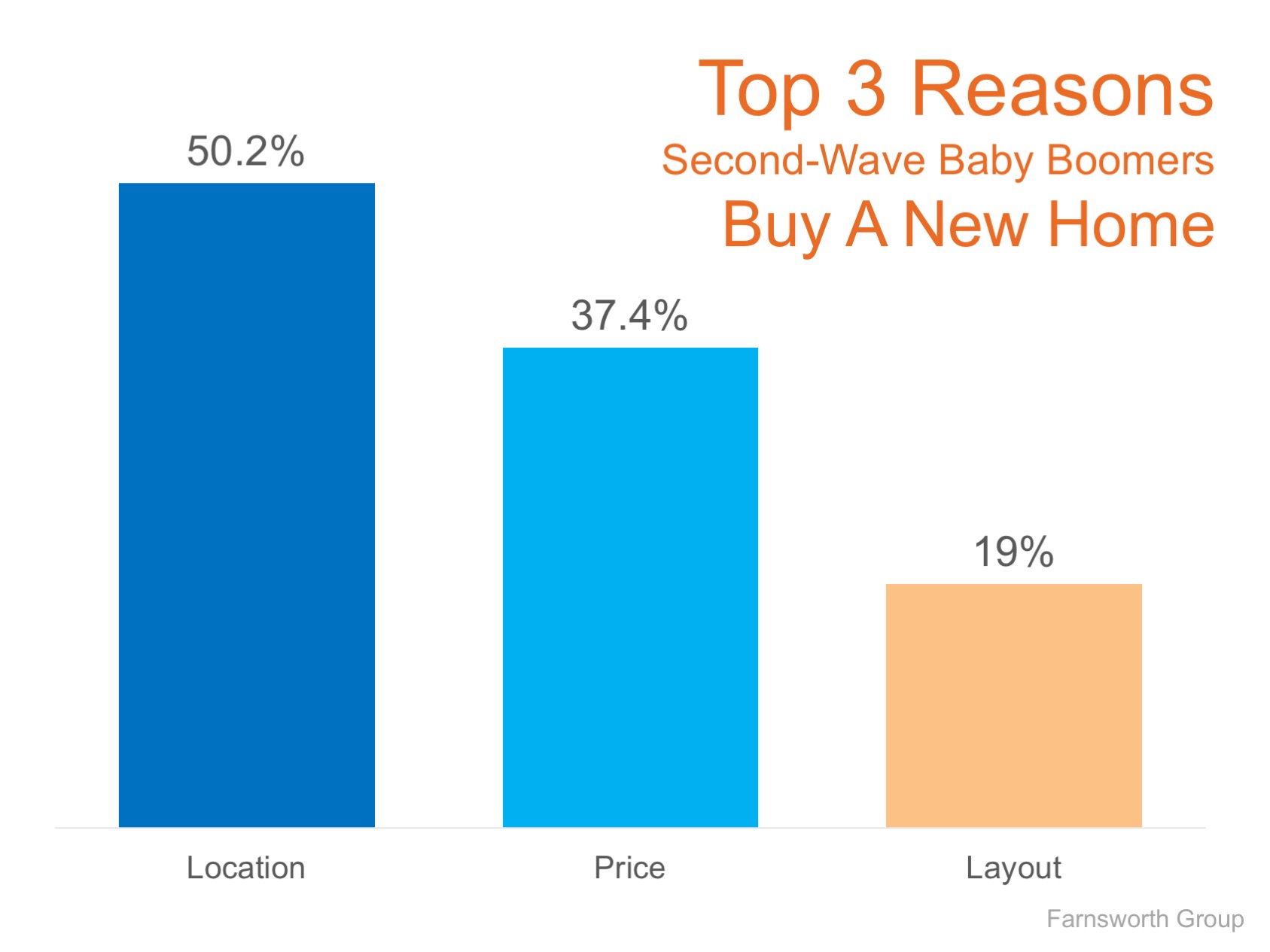
In a homebuyer study performed by The Farnsworth Group, the participants revealed their reasons for purchasing a new home. The top three factors that influence their purchase include area/location (50.2%), price/affordability (37.4%), and the layout of the home (19%) (as shown in the graph below).

Top 3 Things Second-Wave Baby Boomers Look for in a Home | MyKCM

The report also found that when buying a new home, there were other concerns like quality of construction (9%), a safer neighborhood (8.4%), better floor plans (8.25%). The most important rooms or areas are the kitchen (82.8%), master bedroom (59.2%), and great room (36%).

Technology also plays an important role! Second-wave baby boomers prefer wireless security systems (7.1%), lighting that senses and adapts to them (6.3%) and integrated home technology, including “smart” thermostats and lighting controlled by a smartphone (6.2%).

Grey Matter Research and Consulting points to a sense of community as a major factor in wanting to purchase:

The first impressions are important when entering a new community, as is feeling welcome in the community. Amenities such as clubhouses, pools, and walking trails featured prominently in the decision to purchase in a community. Location was key, as residents want their new homes to be near shopping, dining, medical services and entertainment.

Bottom Line

If you are one of the many ‘second-wave’ baby boomers who is starting to feel like their current homes no longer fit their needs, take advantage of the low inventory of existing homes in today’s market by selling your current home and moving on to one that truly fits your new lifestyle.

Image

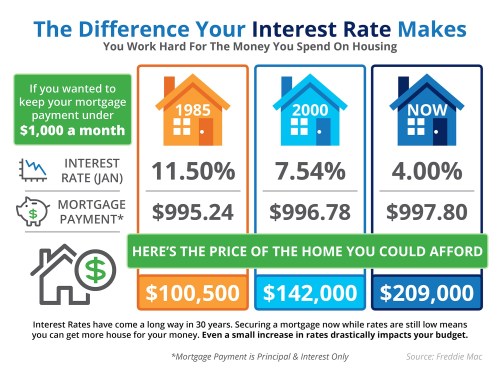
The Difference Your Interest Rate Makes

interestrates-09

The Fed Raised Rates: What Does that Mean for Housing?

The Fed Raised Rates: What Does that Mean for Housing? | Simplifying The Market

The Fed Raised Rates: What Does that Mean for Housing?

You may have heard that the Federal Reserve raised rates last week… But what does that mean if you are looking to buy a home in the near future?

Many in the housing industry have predicted that the Federal Open Market Committee (FOMC), the policy-making arm of the Federal Reserve, would vote to raise the federal fund’s target rate at their December meeting. For only the second time in a decade, this is exactly what happened.

There were many factors that contributed to the 0.25 point increase (from 0.50 to 0.75), but many are pointing to the latest jobs report and low unemployment rate (4.6%) as the main reason.

Tim Manni, Mortgage Expert at Nerd Wallet, had this to say,

“Homebuyers shouldn’t be particularly concerned with [last week’s] Fed move. Even with rates hovering over 4 percent, they’re still historically low. Most market observers are expecting a gradual rise in home loan rates in the near term, anticipating mortgage rates to stay under 5 percent through 2017.”

Bottom Line

Only time will tell what the long-term impact of the rate hike will be, but in the short term, there should be no reason for alarm.

10 Yr. US Treasury Yield – 2.47%

Janet Yellen doesn’t speak until tomorrow, but the FOMC Meeting starts today. Rates have risen so much since the last meeting, it is nearly guaranteed that they will raise rates this time around. However, if you’re expecting rates to spike on the news, I would argue that they will likely fall back down to around 2.19% on the 10 Yr UST in the near term due to the huge bond market decline going into the event. That’s the true irony of the markets, they often do exactly the opposite of what the popular consensus expects. Buy the rumor, sell the news!

Regardless of the Fed’s Rate Decision, Be Prepared! While many market pundits are predicting the biggest stock market rally in all of history, and the consensus is the same…it is a good idea to be a little more pragmatic. The biggest bubble in all of modern monetary history has been blown over the past decade, so with each tick higher, the stock market becomes MORE risky, not less. 
interestrates-slide11

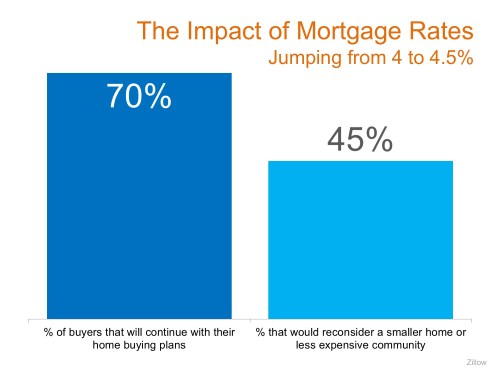
Are prices going down as rates go up???

interestrates-slide03

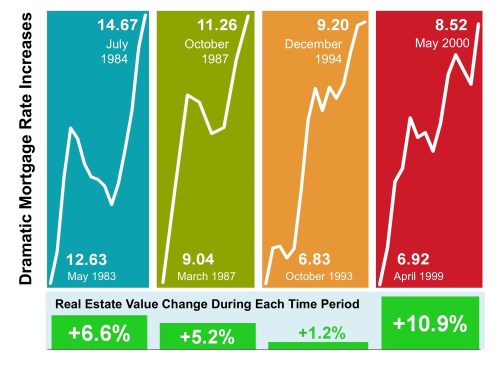
Does the past predict the future?  I found this interesting, the past 4 major interest rate shifts higher did just the opposite to home values.  I have clients asking will the bubble in home prices burst?  What bubble I say.

Market Update 10/27/2015 -Looking for a breakout!!!

2015-10-27_9-47-22

Click this link to see the full video

Bonds are looking for stocks to take a breather, when that happens look for a dip in mortgage rates… click the link above to hear more